What to look for
The faults that actually turn up on a stack, in plain terms
The list
Eight faults a survey is built to catch
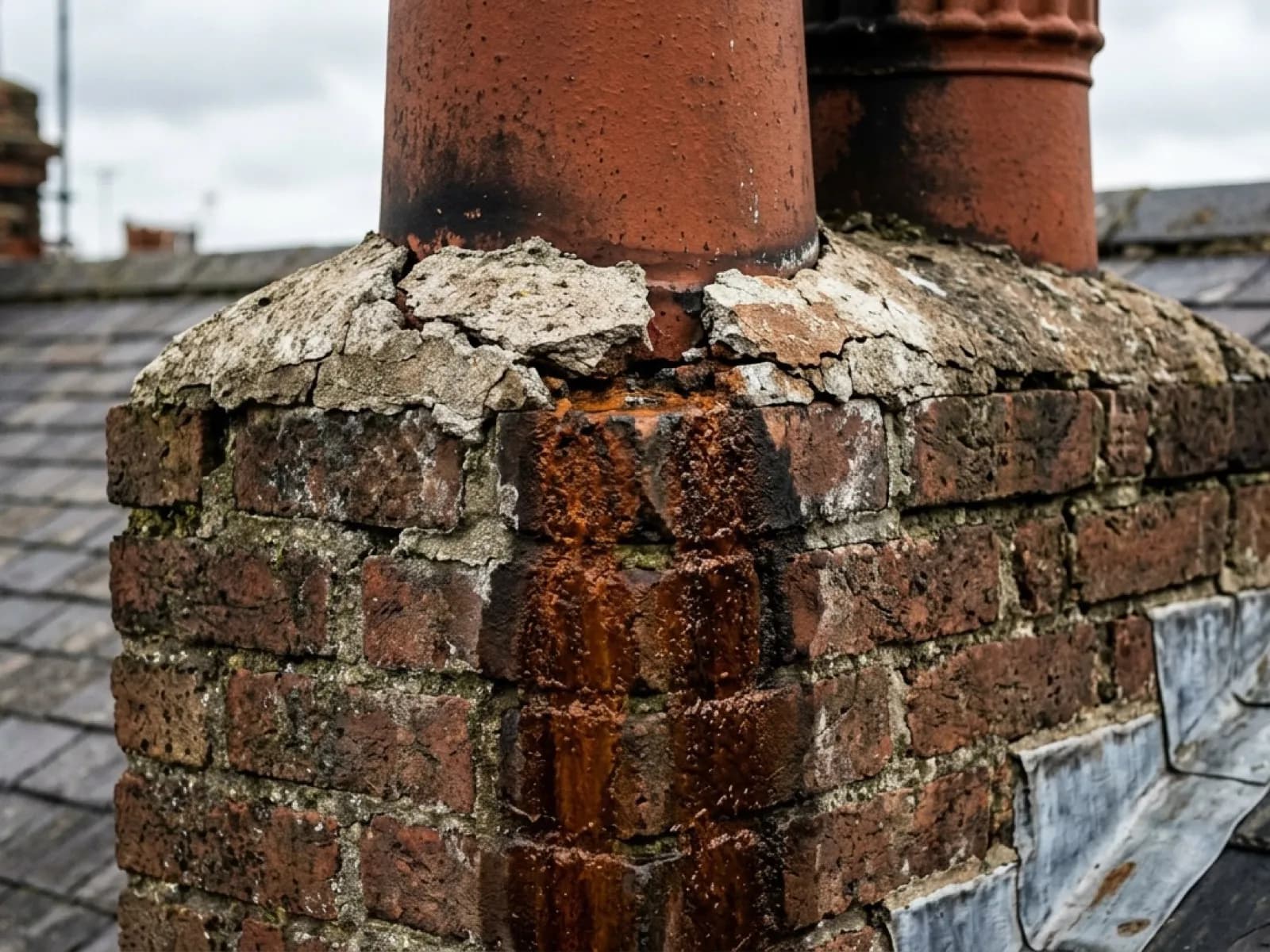
Cracked or separated flaunching
The mortar collar around the base of a pot, usually the first thing to fail. Once it cracks or pulls away from the pot, water tracks straight down inside the stack instead of running off the top of it.
Lifted flashing and soakers
The lead or zinc detail where the stack meets the roof covering. A lifted edge lets water in behind the stack, which can travel a long way under the roof before it shows as a stain inside.
Perished pointing
Mortar joints between the bricks that have softened, crumbled or washed out. Once water gets into an open joint it can freeze on a cold night, expand, and push the brick faces apart.
Spalled brickwork
A brick face that has cracked, flaked or blown off, usually caused by trapped water freezing and expanding inside the brick itself. Once a brick has spalled it no longer sheds water the way it should.
A leaning stack
A stack that is no longer standing true against its own coursing lines, usually the result of movement in the mortar over a long period rather than a sudden event. Worth reading against the stack's own vertical, not a guess from the garden.
A cracked or damaged crown
The concrete or mortar cap across the top of the stack, above the flaunching, that sheds rainwater away from the flue opening. A cracked crown lets water straight down into the stack from directly above.
A cracked or loose pot
A chimney pot that has cracked, chipped or come loose in its collar. A pot in this state can let water in around its own base even where the flaunching beneath it is still sound.
A blocked or restricted cowl or flue opening
Debris, a bird's nest or a damaged cowl restricting the flue opening. This is a job for a sweep to clear from inside, but a survey can show whether the cowl itself needs replacing first.
Why these are hard to catch from the ground
Every fault on this list is small relative to the size of a stack, and a stack sits above eye level on every side of a house. A pair of binoculars from the garden can tell you that a pot looks off or that a patch of brickwork looks stained, but it cannot tell you whether the flaunching underneath is actually cracked or whether a flashing edge has properly lifted rather than just looking uneven from that angle.
A close aerial photograph, taken from a standoff distance a ladder cannot reach, resolves that level of detail without anyone standing on the roof or leaning anything against the stack to get there.
For the trade
Written for a sweep or a roofer to read
A chimney sweep's own view is from inside the flue, looking up, which tells you a great deal about what is happening inside the stack and very little about the outside of it above the roofline. A roofer asked to look at a chimney while working on something else entirely is often working from the ground with binoculars.
This survey covers the outside of the stack in the same terms used on this page, so a sweep or a roofer reading the report can match what was found directly against what they already suspected, rather than translate a general description into their own trade language first.
For the parts you cannot see from the ground
Get a stack checked against this list
Send the address and what is worrying you about the stack. Sam Hembury will come back with a fixed price and the next available slot.