Skip to content
Drone Chimney SurveyExeter · Devon and the South West
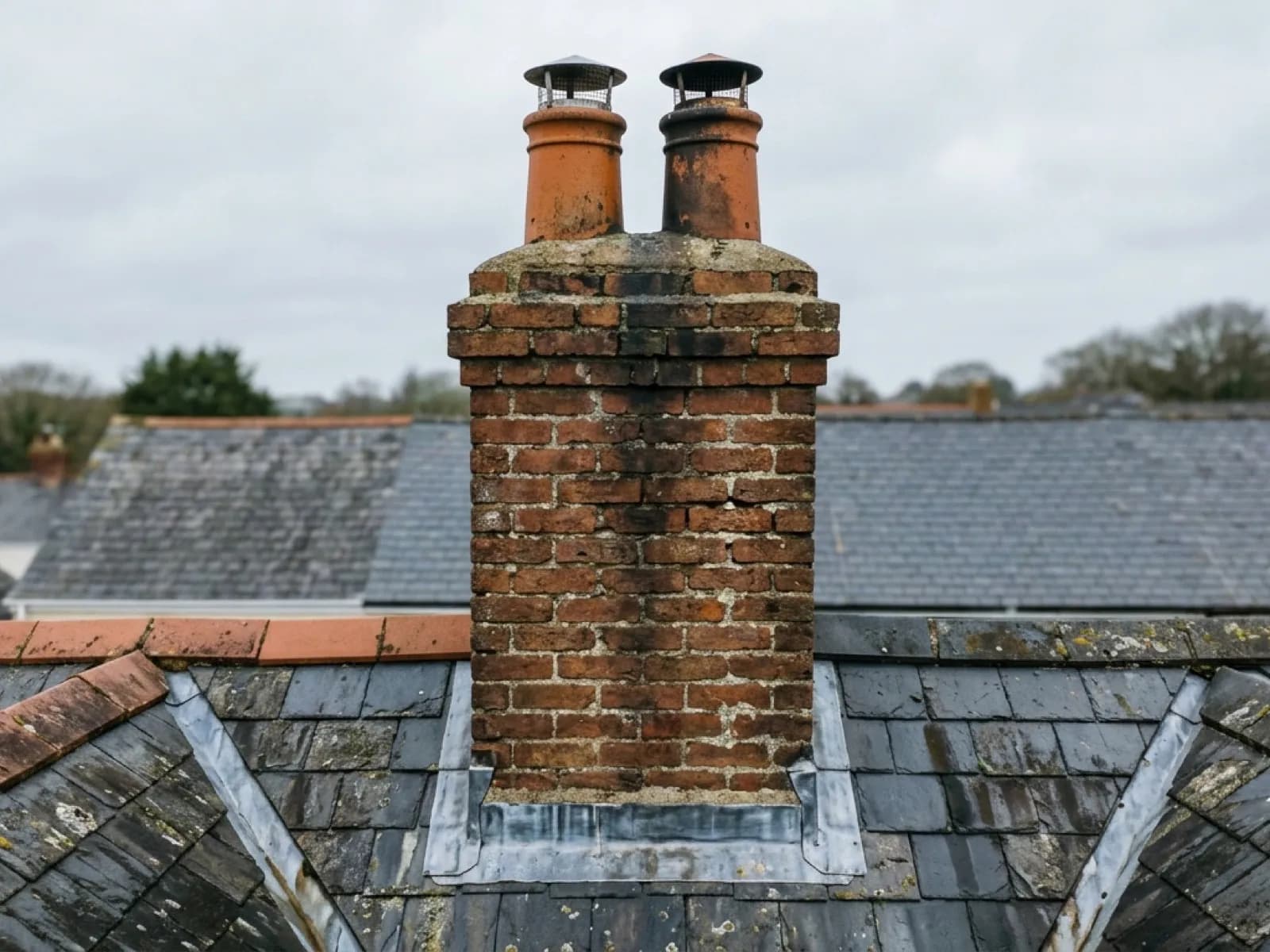
A close aerial photograph of a Victorian brick chimney stack with two clay pots, labelled with markers pointing to the pot and cowl, the flaunching, the flashing and the brickwork
Pot and cowl
Flaunching
Brickwork and pointing
Flashing and soakers

For homeowners, sweeps and roofers

Close enough to see which joint on the stack has actually failed

A survey built around the stack itself: pots and cowls, flaunching, flashing and soakers, brickwork and pointing, photographed close enough for a sweep or a roofer to read, with a written report within 48 hours.

  • No scaffolding, no ladders against the stack
  • Fixed price agreed before the visit
  • Written report within 48 hours
  • A2 Certificate of Competency, CAA registered, insured with Coverdrone

The actual problem

Nobody actually looks at a chimney stack until something is already wrong

A stack sits above eye level on every side of a house, and most of it cannot be reached from a ladder without someone standing on the roof beside it. A damp patch on the chimney breast, a pot that looks like it is leaning, or a roofer mentioning the flashing on the way past all end up in the same place: somebody looking up from the garden, guessing.

That guessing rarely settles anything. One person thinks it is the flaunching around the pot, another thinks it is the flashing where the stack meets the roof, and short of paying for scaffolding just to find out, there has traditionally been no fast way to see the actual stack close enough to tell the two apart.

A flown survey works right around the stack from a safe standoff distance, photographing every face at high resolution and closing in on the pots, the flaunching, the flashing and the brickwork, so what needs attention gets named rather than guessed at.

See the eight faults a survey is built to catch

What we fly

One survey, close on the stack, two different readers

The flying is much the same each time. What changes is who is reading the report at the end and what they already suspect before it lands.
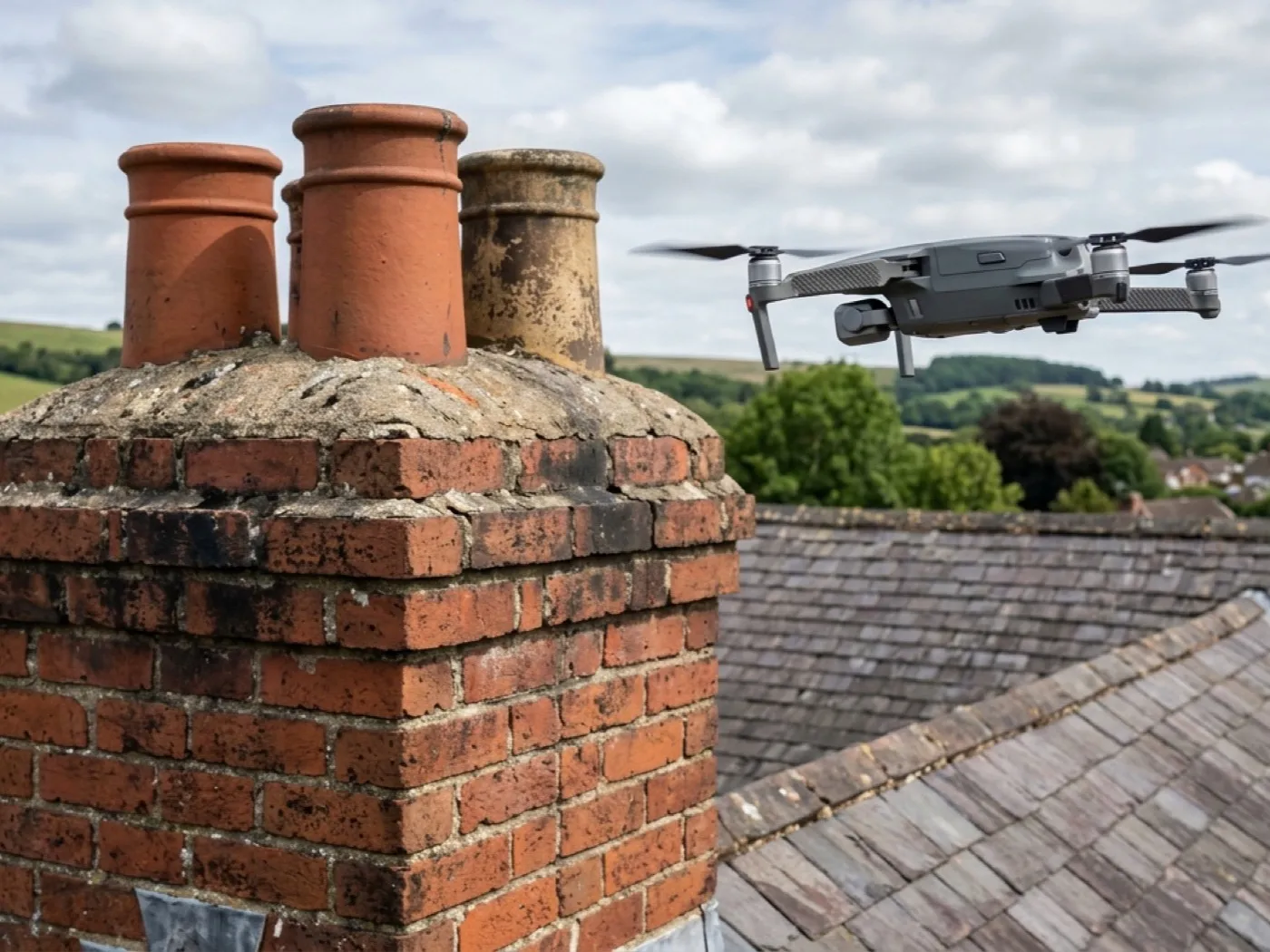
A drone hovering close to a tall brick chimney stack, photographing the pots, flaunching and flashing at close range

Chimney Survey

Close aerial photographs of a chimney stack, pots and cowls, flaunching, flashing and soakers, brickwork and pointing, taken close enough for a sweep or a roofer to read.

The chimney survey
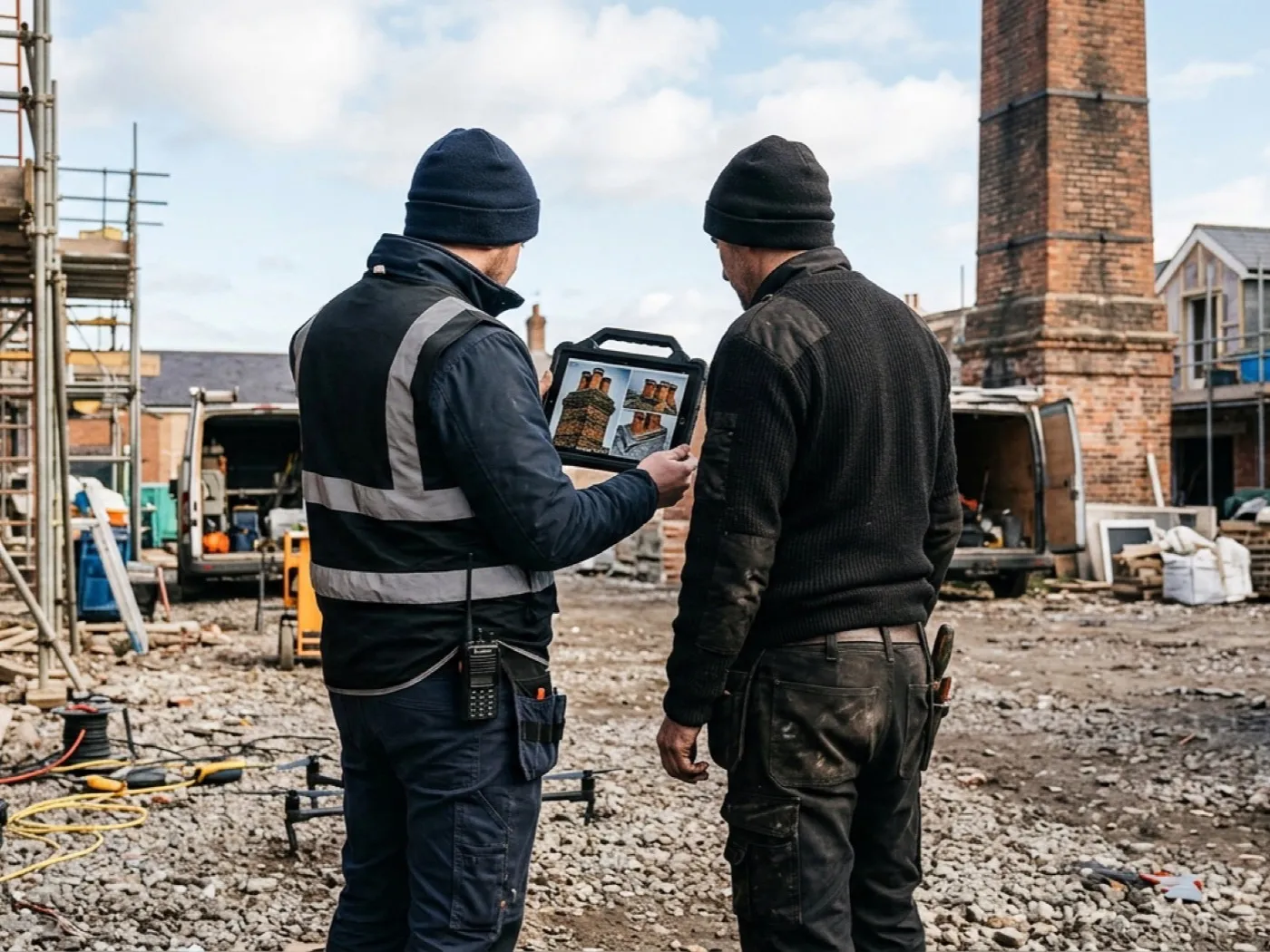
A chimney sweep and a drone operator looking together at close photographs of a chimney stack on a tablet at a job site

For Sweeps and Roofers

A dated, close photographic record of a stack a client can book directly, or you can send on, so you are quoting or advising from evidence rather than what is visible from the ground.

For sweeps and roofers

Credentials

What sits behind the survey

CAA registered

Operator ID and Flyer ID held, plus the A2 Certificate of Competency. Every survey is planned to the rules that apply to the site, and the paperwork is available before the visit if your sweep, roofer or agent wants it.

100 megapixel camera

A DJI Mavic 4 Pro with a Hasselblad camera and 6K video, close enough from a safe standoff distance to read a mortar joint or a hairline crack in a flaunching collar without leaning anything on the stack.

Radiometric thermal option

A DJI Mavic 2 Enterprise Advanced carrying a 640 by 512 thermal camera, flown alongside the visual pass where a damp pattern on a stack needs reading against the brickwork around it.

Insured with Coverdrone

Full commercial cover for the operation. Certificates go to sweeps, roofers, letting agents and insurers as a matter of course, without anyone having to chase for them.

What you get
A report a sweep or a roofer can act on without translating it first

The flying is the straightforward part. The value is in what lands in your inbox within 48 hours.
  • Every face of the stack photographed close, at 100 megapixels
  • The pots and cowls checked for cracks and a secure fit
  • The flaunching around each pot checked for cracking and separation
  • Flashing and soakers checked where the stack meets the roof
  • Brickwork and pointing checked for perishing, spalling and staining
  • A written note on lean and on any cracked crown, plus the full resolution originals
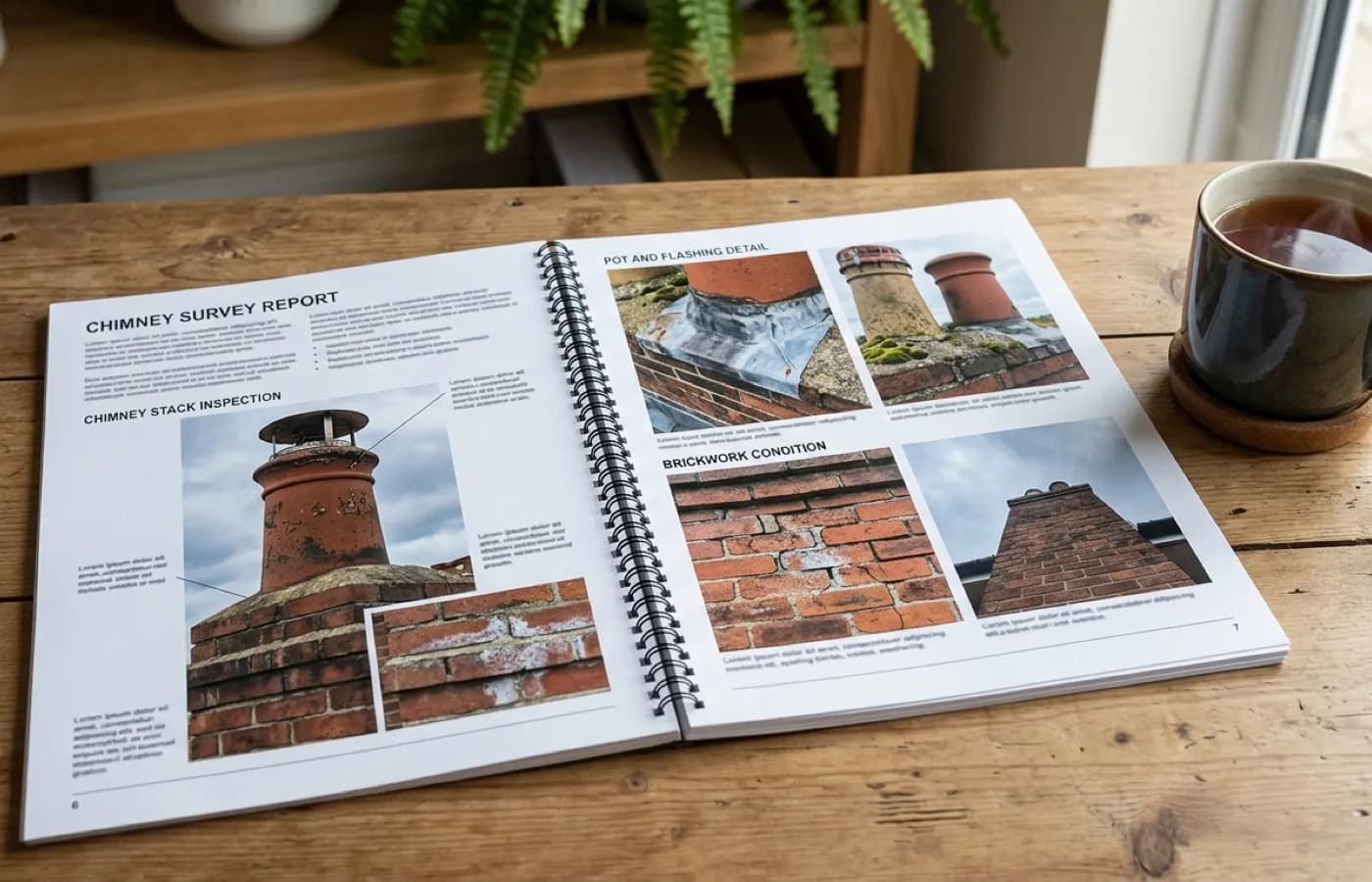
A printed chimney survey report open on a desk, close photographs of a stack's pots and brickwork printed alongside a mug of tea

What it looks like

The detail a ladder view would give you, without the ladder

None of these are dramatic from the ground. All of them are exactly the kind of thing a stack survey exists to catch close up.
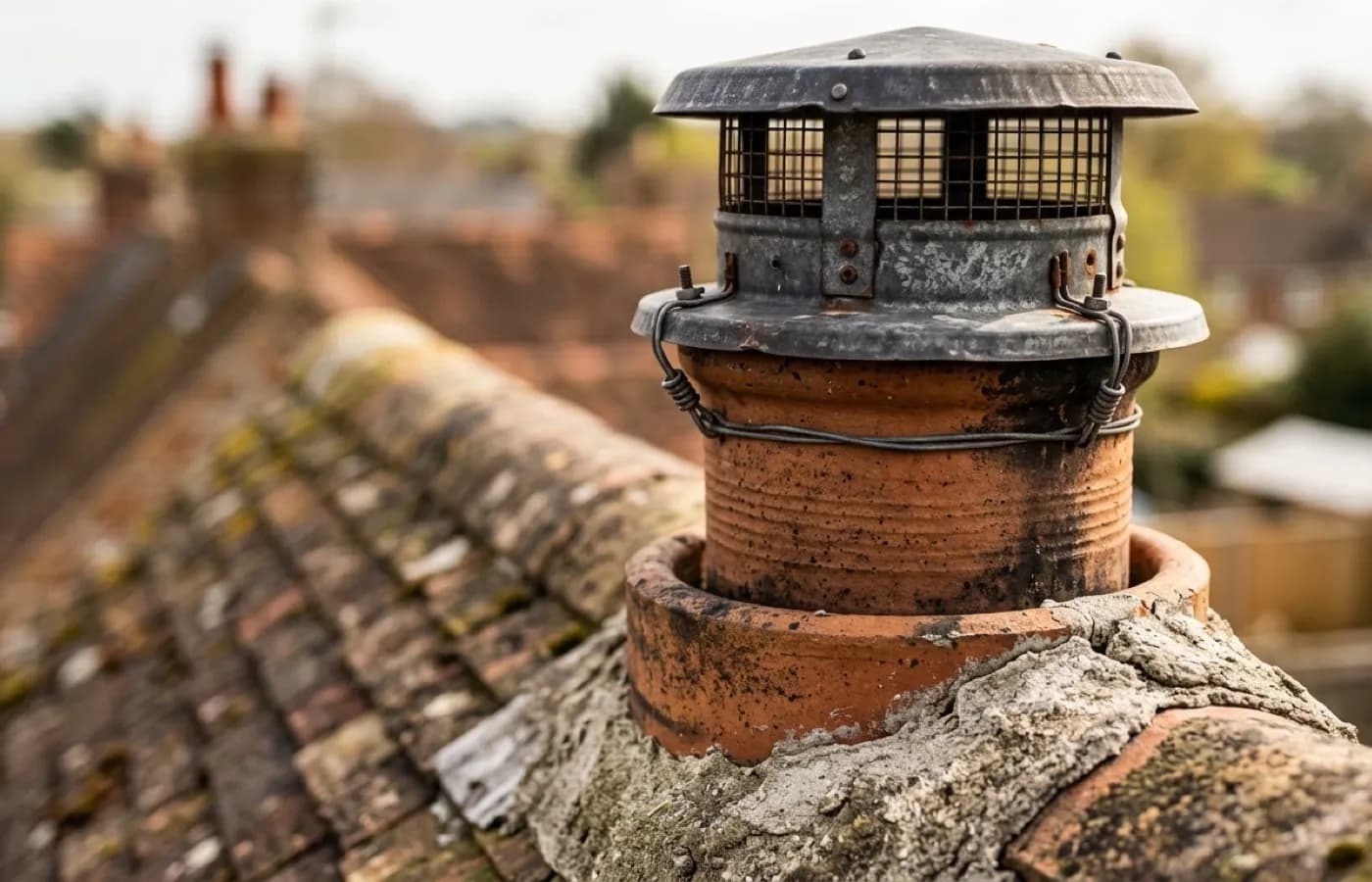
A close photograph of a chimney pot and cowl, the clay collar around its base and the metal cowl checked for cracks and a secure fit
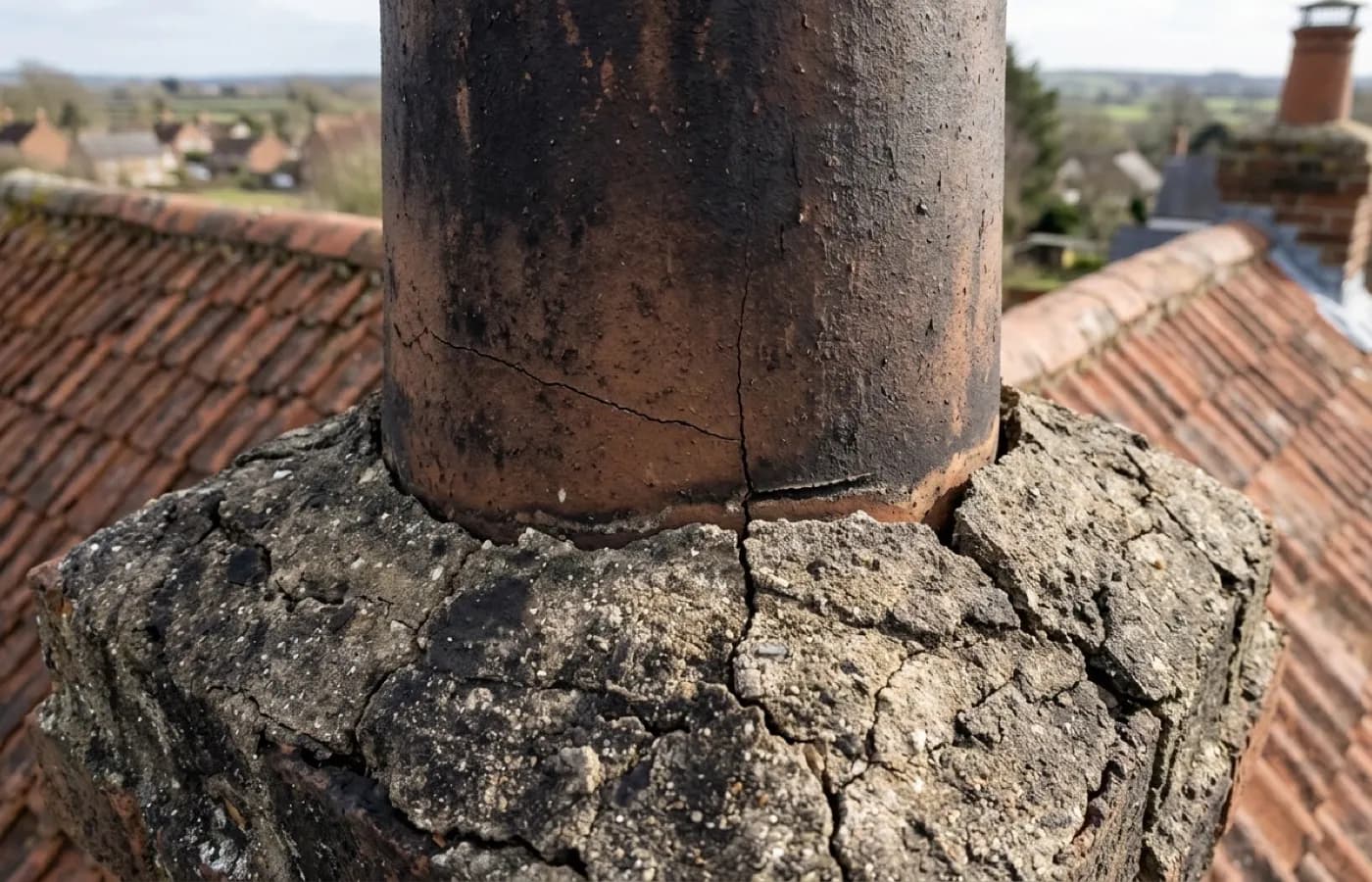
The mortar flaunching around the base of a chimney pot, cracked and pulling away from the pot in one corner
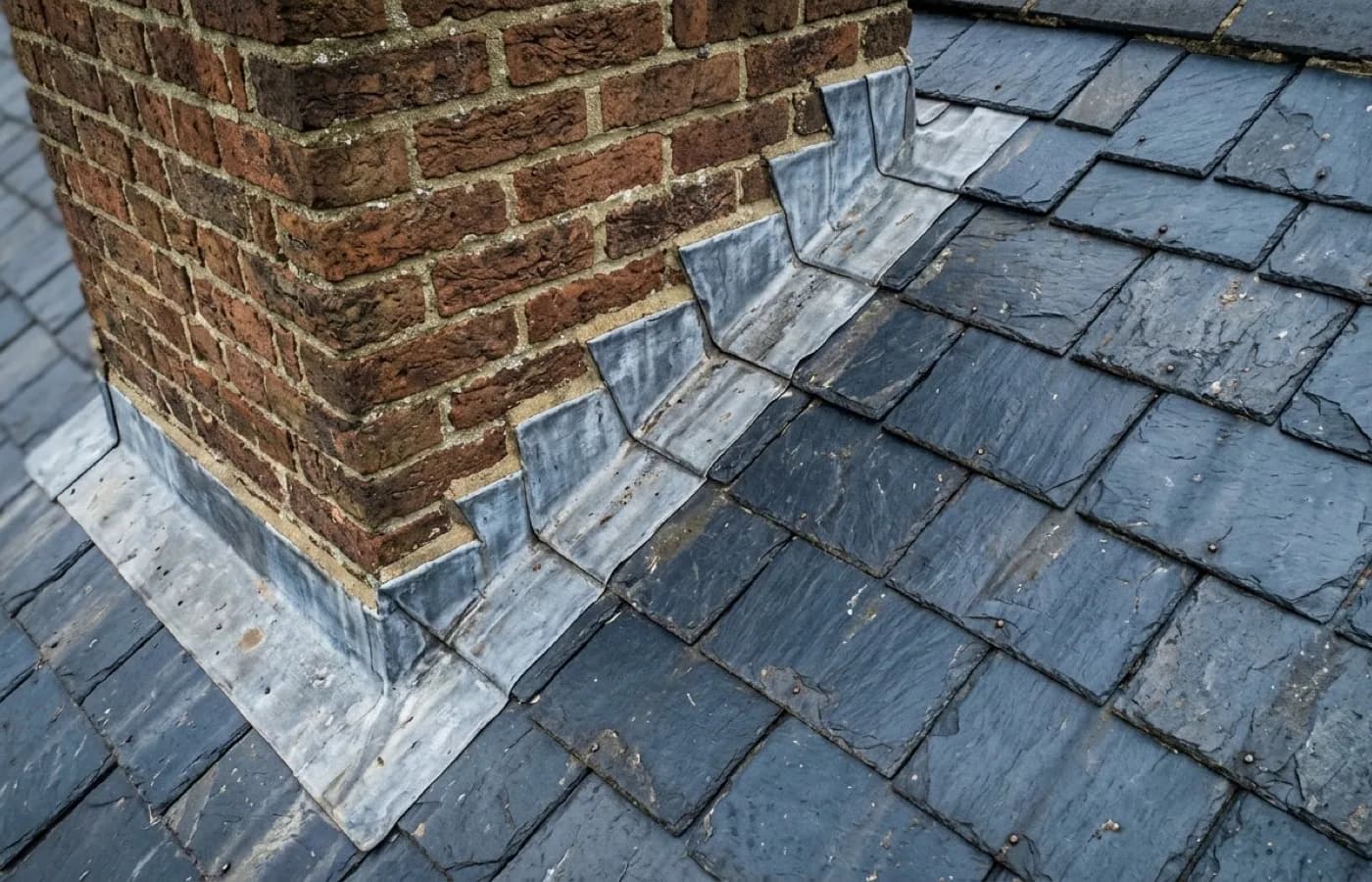
Lead flashing and soakers where a chimney stack meets a slate roof slope, checked for lift and a failed seal
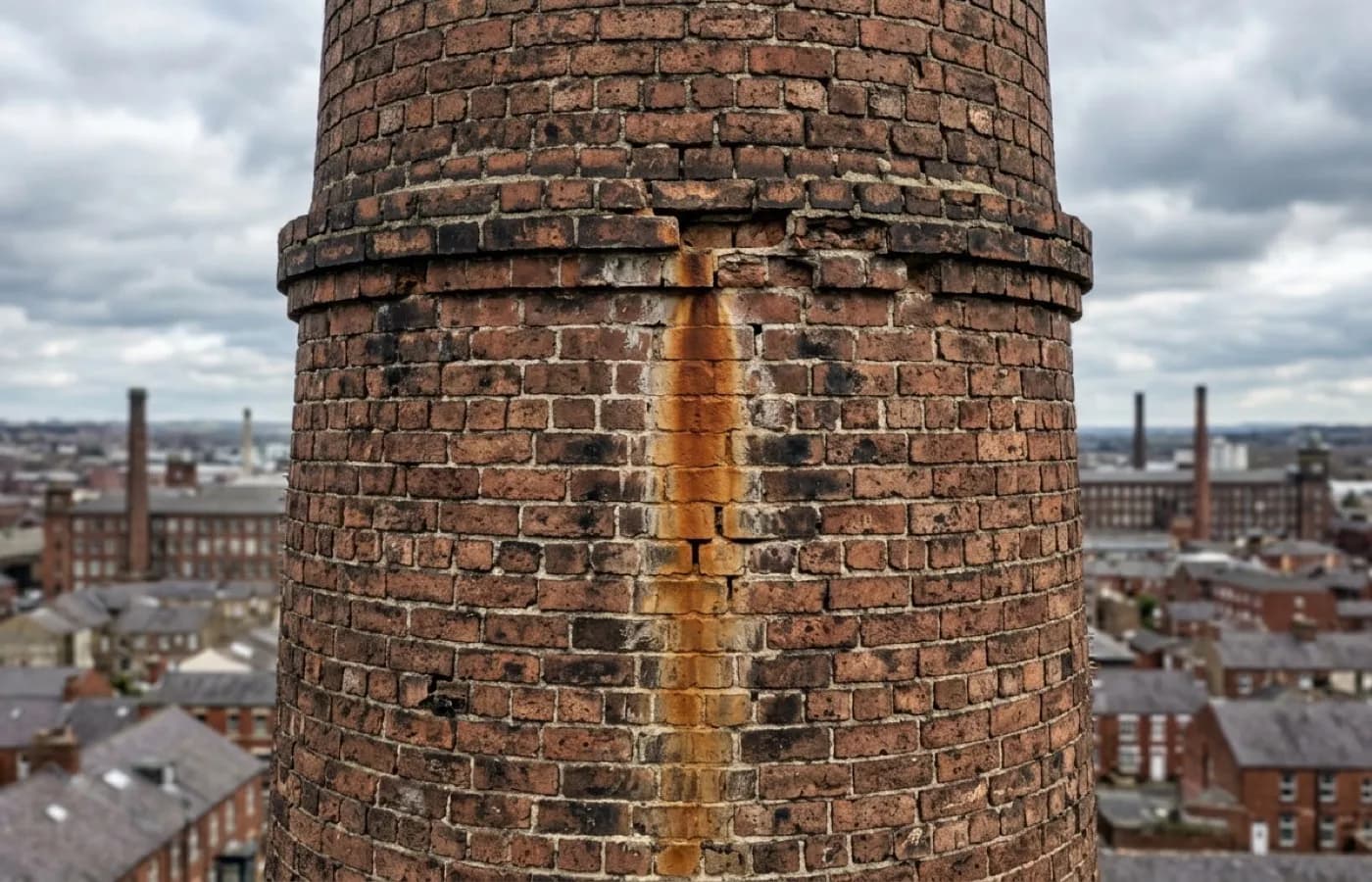
Brickwork on a tall Victorian chimney stack with perished pointing and a rust-coloured damp stain running down from a failed joint above

Where we fly

Devon first, then as far as the South West goes

Every town below has its own page, written around the chimney stock you actually meet there, because a Victorian mill terrace carries a very different stack to a Georgian market town frontage or a salt-exposed seaside parapet.

Questions

Questions we get asked

Do I need this if I already have a sweep who checks the flue?
A sweep clears and checks the inside of the flue from below, which is not the same view as the outside of the stack above the roofline. This survey covers the pots, cowls, flaunching, flashing and brickwork a sweep's own tools cannot reach, so the two jobs sit alongside each other rather than overlapping.
Will you tell me exactly what is wrong with my chimney?
The report describes what was seen on each part of the stack, in plain language, and what it suggests. Whether a stack needs rebuilding, repointing or leaving alone is a judgement for whoever prices the repair, using the images as their starting point.
Do you fix the chimney as well?
No. This is a survey, not a repair. The report and the images are there so a sweep, a roofer or a builder can quote the work from evidence rather than a guess from the ground.
Can you fly close to a stack in a narrow terraced street?
Usually yes. The A2 Certificate of Competency covers flying closer to buildings and people than the basic category allows, which is what makes tight streets and dense terraces workable. Some sites are restricted by airspace or by what is directly below, and that is checked before the booking is confirmed rather than on the day.
What if the weather turns on the day?
The flight moves. Rain on the lens ruins the imagery and strong wind makes a stable close pass around a stack unsafe, so a survey flown in poor conditions is not worth having. Rescheduling costs nothing and is treated as normal.
Do I need to be home?
No. Plenty of surveys are flown for landlords, letting agents and managing agents with nobody on site. All that is needed is somewhere lawful to take off and land, and permission to be there.
What do I actually get at the end?
A written report within 48 hours, with a plain description of what was found on the pots, the flaunching, the flashing and the brickwork, plus the full resolution images so a sweep or roofer can look at the same evidence themselves.
Is the report useful for an insurance claim?
It gives dated, close photographic evidence of the stack's condition on the day, which is often the first thing asked for before storm or damage repair work is authorised. It is not a loss adjuster's assessment and does not price repairs, and it does not claim to be either.
How much does a chimney survey cost?
It is a fixed price per survey, agreed before the visit, based on the address and the number of stacks involved. Send the address and what is worrying you about the stack and you get the figure back rather than a range.

For the parts you cannot see from the ground

Book a chimney survey with Drone Chimney Survey

Tell us the address and what you need looking at. Sam Hembury will come back with a fixed price and the next available slot.

Call 07367 107530Book a chimney survey